
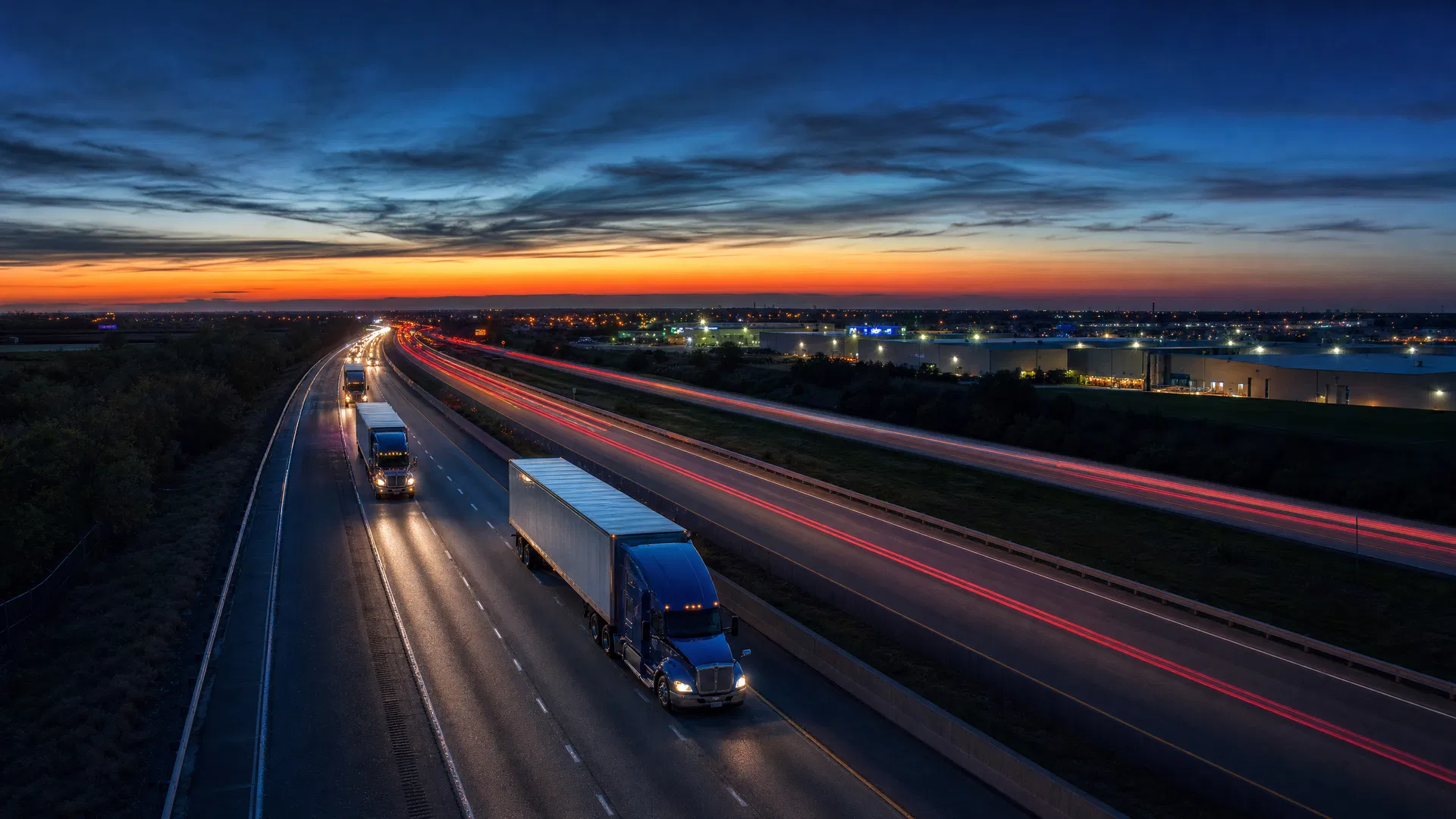
The Most Dangerous Trucking Corridors in America
These highways carry the heaviest freight traffic in the nation — and record the highest rates of fatal commercial truck crashes.
America's Freight Arteries
The United States interstate highway system carries approximately 70% of the nation's freight by value, with commercial trucks logging over 300 billion miles annually. This freight network is concentrated on a relatively small number of high-volume corridors — and those same corridors record disproportionately high rates of fatal commercial truck crashes.
This analysis identifies the most dangerous trucking corridors in America based on FMCSA crash data, NHTSA fatality statistics, and state DOT reports.
The Most Dangerous Interstate Corridors
I-10: The Southern Tier
Stretching 2,460 miles from Santa Monica, California to Jacksonville, Florida, Interstate 10 is the longest and arguably most dangerous interstate highway for commercial truck traffic. The corridor passes through some of the nation's most active freight markets — Los Angeles, Phoenix, Tucson, El Paso, San Antonio, Houston, Baton Rouge, and New Orleans — and carries enormous volumes of cross-border freight from Mexico.
Key danger zones:
- The I-10/I-25 interchange in New Mexico (high crosswind conditions)
- The Houston Ship Channel area (extreme congestion and industrial traffic)
- The I-10 corridor through Louisiana (poor road conditions, frequent flooding)
Annual large truck fatalities: Approximately 380 across all states
I-35: The NAFTA Superhighway
Interstate 35 runs 1,568 miles from Laredo, Texas to Duluth, Minnesota, serving as the primary corridor for U.S.-Mexico trade. The stretch from Laredo through San Antonio, Austin, Dallas-Fort Worth, Oklahoma City, and Kansas City carries some of the heaviest commercial truck volumes in the nation.
Texas alone accounts for approximately 60% of I-35's truck crash fatalities, with the Austin and Dallas-Fort Worth metro areas particularly dangerous due to construction, congestion, and high speeds.
Annual large truck fatalities: Approximately 290 across all states
I-80: The Transcontinental Corridor
Interstate 80 spans 2,899 miles from San Francisco to Teaneck, New Jersey, crossing the Sierra Nevada, the Great Basin, the Rocky Mountains, and the Great Plains. The mountain passes in California and Utah are particularly dangerous in winter conditions, with jackknife crashes and runaway truck incidents common.
The I-80 corridor through Wyoming is notorious for extreme wind conditions, with gusts frequently exceeding 70 mph and causing truck rollovers.
Annual large truck fatalities: Approximately 260 across all states
I-75: The Southeast Spine
Interstate 75 runs 1,786 miles from Miami, Florida to Sault Ste. Marie, Michigan, serving as the primary north-south freight corridor for the eastern United States. The corridor passes through some of the nation's most congested urban areas — Miami, Atlanta, Cincinnati, Detroit — and some of its most dangerous rural stretches.
The "Malfunction Junction" interchange in Atlanta, where I-75 and I-85 merge, is one of the most congested and crash-prone freight intersections in the country.
Annual large truck fatalities: Approximately 310 across all states
I-95: The Northeast Corridor
Interstate 95 runs 1,919 miles along the East Coast from Houlton, Maine to Miami, Florida. The corridor serves the densely populated Northeast megalopolis and carries enormous volumes of freight between major population centers.
The I-95 corridor through Maryland, Delaware, New Jersey, and Connecticut is particularly dangerous, with high traffic volumes, frequent construction, and numerous complex interchange areas.
Annual large truck fatalities: Approximately 240 across all states
Rural vs. Urban: Different Risks, Different Causes
The data reveals a stark difference between rural and urban trucking accident patterns:
| Factor | Rural Crashes | Urban Crashes |
|---|---|---|
| Fatality rate | Higher | Lower |
| Primary cause | Speed, fatigue, weather | Congestion, intersections |
| Time of day | Night/early morning | Peak commute hours |
| Crash type | Rollover, head-on | Rear-end, sideswipe |
| Response time | Longer | Shorter |
Rural crashes account for approximately 60% of large truck fatalities despite occurring on roads with significantly lower traffic volumes. The higher fatality rate reflects higher speeds, longer emergency response times, and less protective infrastructure.
The Role of Weather
Weather conditions are a contributing factor in approximately 19% of large truck crashes. The most dangerous weather-related conditions for commercial trucks include:
Ice and Snow: Black ice is particularly dangerous for commercial trucks, which require significantly longer stopping distances than passenger vehicles. The I-80 corridor through Wyoming and the I-90 corridor through South Dakota and Montana record some of the highest weather-related truck crash rates in the country.
High Winds: Commercial trucks present a large surface area to crosswinds, making them vulnerable to rollover in high-wind conditions. The I-10 corridor through New Mexico and the I-80 corridor through Wyoming are particularly prone to wind-related truck crashes.
Fog: Dense fog reduces visibility and is a contributing factor in many multi-vehicle pileups involving commercial trucks. The San Joaquin Valley in California and the I-77 corridor in West Virginia are known for dangerous fog conditions.
Frequently Asked Questions
What is the deadliest highway for truck accidents? Based on absolute fatality numbers, Interstate 10 in Texas records more large truck crash fatalities than any other single highway segment in the United States.
Are rural or urban highways more dangerous for truck accidents? Rural highways record higher fatality rates per crash due to higher speeds and longer emergency response times. Urban highways record higher absolute numbers of crashes due to traffic volume.
What time of day are trucking accidents most common? Fatal trucking accidents peak between 6:00 AM and 3:00 PM, reflecting peak freight delivery hours. However, crashes occurring between midnight and 6:00 AM are disproportionately fatal, reflecting the role of driver fatigue in nighttime crashes.
Find an Attorney in Your City
Were You Injured in a Trucking Accident?
Find an experienced trucking accident attorney in your city. Most offer free consultations.
Find an Attorney