
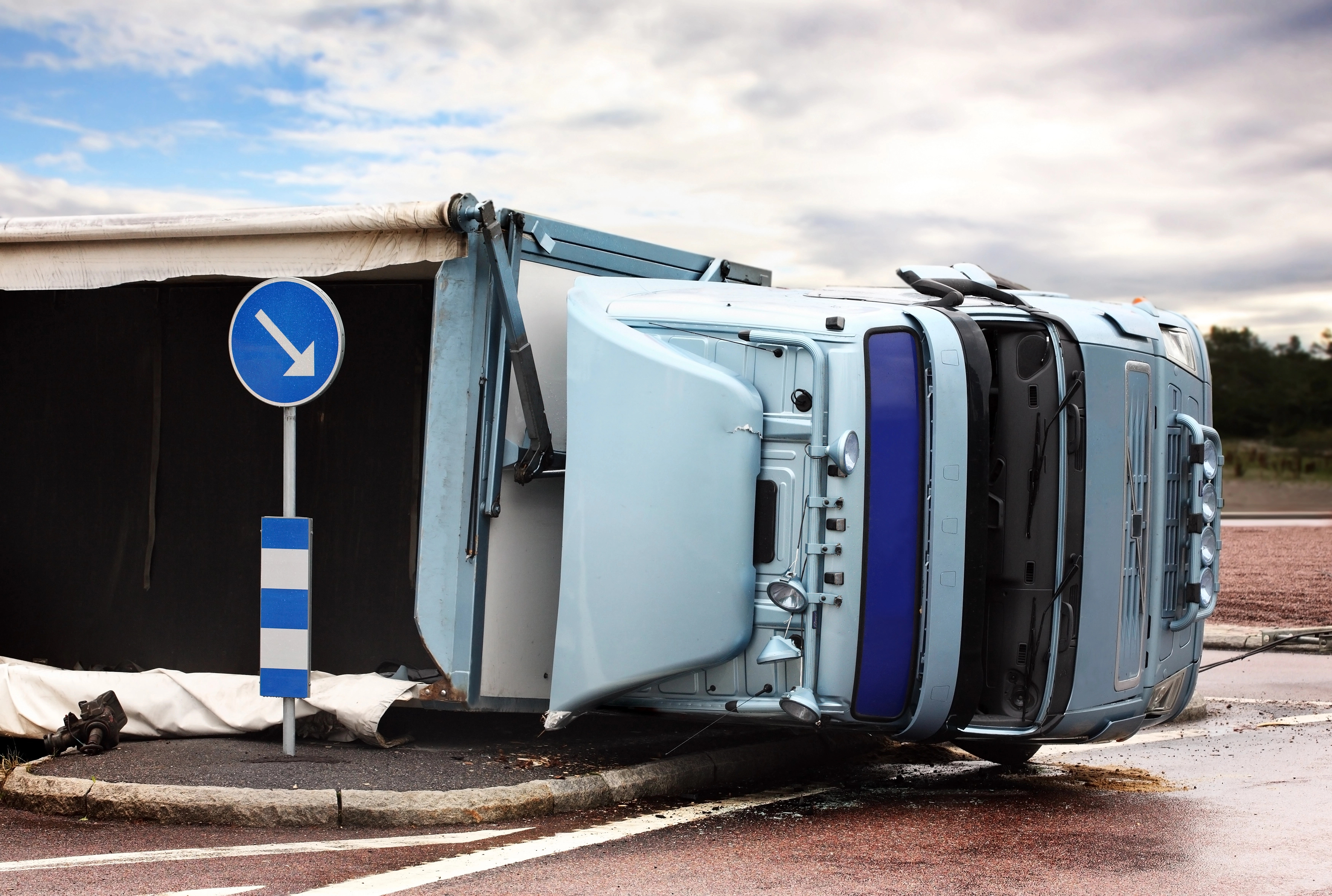
How to Read a Truck Accident Police Report
A practical guide to the facts, codes, diagrams, and limits of an official crash report.
Start With the Report’s Purpose and Its Limits
Read a truck accident police report as a contemporaneous record of an officer’s investigation—not as a final decision about who is legally responsible. It can preserve the basics of a crash, identify people and vehicles, record scene observations, and point toward evidence that may need closer review. But reports differ by state and agency, may be completed before every fact is known, and do not replace witness testimony, physical evidence, vehicle data, medical records, or the legal rules that apply to a claim.
Police crash reports are the foundation of much traffic-safety data collection. The National Highway Traffic Safety Administration’s Model Minimum Uniform Crash Criteria (MMUCC) describes a voluntary, standardized minimum set of crash-data variables, while also recognizing that states use different definitions, fields, choices, and reporting thresholds. 1 In other words, the layout and codes on your report may not match a report from another state. Use the form’s own legend or the issuing agency’s instructions before drawing conclusions from an abbreviation or a number.
For a collision involving a commercial truck, the report can be especially useful because it may identify the tractor, trailer, carrier, driver, location, witnesses, and the initial account of how the collision occurred. Those details help a claimant, insurer, or attorney identify the correct records to request and the questions that still need answers. If you are still at the early-response stage, see what to do after a truck accident for general next steps.
Get the Right Version Before You Analyze It
Ask the law-enforcement agency or state crash-records office how to obtain the official report for the jurisdiction where the crash happened. Have the report number, crash date, location, and names available. Agencies may use a portal or require a request form, identification, a fee, or proof of involvement.
Do not assume the first document is the whole record. There may be supplements, photos, an inspection report, witness statements, citations, reconstruction materials, or corrections. Ask whether supplements have been issued, and keep the original report unmarked while recording questions in a separate note.
Read the Report in a Deliberate Order
A useful approach is to move from the objective identifiers to the officer’s reconstruction of the event. The table below explains common sections. Labels vary, so a section may be absent or combined with another one.
| Report section | What to check | Why it may matter |
|---|---|---|
| Header and crash identifier | Report number, date and time, agency, investigating officer, road, county, and exact location | Confirms that you have the right event and helps locate related records or video requests. |
| Parties and units | Each driver, passenger, pedestrian, witness, and vehicle/unit number | Unit numbers connect the diagram, narrative, damage codes, and driver information. Do not assume “Unit 1” means the truck or the at-fault driver. |
| Commercial-vehicle details | Carrier name, DOT or other identifiers, tractor and trailer information, cargo or hazardous-material entries, and vehicle configuration | Can help identify the carrier, equipment, and potentially relevant records. A blank field does not prove that an item did not exist. |
| Road, weather, and traffic controls | Lanes, intersection, lighting, surface, work zone, weather, speed limit, signs, and signals | Supplies context for visibility, movement, road design, and possible contributing conditions. |
| Narrative and diagram | Vehicle paths, point of impact, resting positions, sequence of events, and source of information | Shows the officer’s initial reconstruction. Check that the vehicle numbers and directions match across both sections. |
| Factors, violations, and injuries | Coded contributing factors, citations, suspected impairment, injury designations, and damage | Identifies issues to investigate; it does not settle every factual or legal question. |
Match the unit numbers across every section
Do not lose track of the unit numbers. A truck may be “Unit 2” and a passenger car “Unit 1.” Make a key before reading the narrative, then use it to test the diagram, damage description, factors, and citations.
Check names, plates, vehicle information, insurer entries, and carrier name. A carrier name on the cab is a lead, not a complete answer to ownership, employment, or control.
Treat the diagram as a map, not a scale drawing
The diagram usually depicts lane positions, direction of travel, impact, traffic controls, and the final position of vehicles. It may use arrows, dashed lines, unit numbers, and symbols explained in a legend. Compare it line by line with the narrative. If the narrative says the truck changed lanes but the diagram suggests a turn, record the discrepancy rather than choosing one version yourself.
Official reporting manuals illustrate why this comparison matters. Pennsylvania’s manual directs officers to sketch the roadway and units at the time of collision, recreate the occurrence from statements and physical evidence when vehicles have been removed, and show how the crash occurred rather than simply where vehicles sat when the officer arrived. 2 That is helpful context, but it also explains why a diagram may reflect an officer’s reconstruction rather than a photograph-like record.
Read the narrative for sources and qualifiers
Look for whether the narrative attributes a statement to a driver or witness, refers to physical evidence, notes a camera, or identifies unavailable information. Words such as “stated,” “estimated,” “unable to determine,” and “according to” describe the basis and limits of an observation.
Georgia’s Department of Transportation says a crash narrative should summarize findings from structured questioning and physical evidence, while a diagram should represent conditions and vehicle paths before and during the crash. 3 This state-specific guidance is a useful reminder to ask what the officer observed and what came from an account.
Interpret Codes, Factors, and Citations Carefully
Reports often convert details into codes for a database. Use the issuing jurisdiction’s code sheet, report legend, or official manual—not a generic web result—to define a movement, road condition, collision type, driver action, or factor.
A “contributing factor” is generally an investigative classification, not a judicial finding. For example, an officer may list unsafe speed, failure to yield, fatigue, an equipment issue, roadway conditions, or “none.” That entry can guide follow-up, but it may be revised by later evidence and may not address every contributing circumstance. Likewise, a traffic citation can be significant, but it does not by itself answer all questions about negligence, causation, damages, or comparative responsibility.
If the report contains a “commercial motor vehicle” or cargo section, compare it with the truck and trailer description. A missing USDOT number, inspection result, or equipment notation could mean the field was not completed, the information was unavailable, or the agency’s form did not use that field; it is not proof that the carrier lacked records. For a closer look at regulatory issues that may be investigated separately, see FMCSA violations in truck accident cases.
Why the Report Matters in a Truck Accident Investigation
The report provides an organized account of a fast-moving event. Its identifying and location details can help locate dispatch records, video, photographs, towing records, and witnesses. Carrier and vehicle details may also help direct preservation requests.
Federal motor-carrier rules add an important but limited recordkeeping point. Under 49 CFR 390.15, motor carriers must maintain an accident register for three years after each qualifying accident and include specified information such as the date, location, driver, injuries, fatalities, and certain hazardous-material releases. The rule also requires copies of accident reports required by state or other government entities or insurers. 4 FMCSA guidance clarifies that this does not require a carrier to seek out and retain reports prepared by state investigators or insurers. 5 The rule does not, by itself, give an individual automatic access to carrier records; the available process depends on the circumstances and applicable law.
The report can reveal gaps. It may not include event-data information, electronic logging records, maintenance history, onboard video, inspection results, or a full reconstruction. Our guide to truck black box evidence explains electronic information that may warrant prompt attention.
A report is not automatically the last word in court
Whether a report, a statement within it, or an officer’s opinion can be used in a legal proceeding depends on the jurisdiction, the purpose for which it is offered, the evidence rules, and the facts of the case. The federal rules are one example only. Federal Rule of Evidence 803(8) addresses certain public records, including an office’s activities, observations made under a legal duty to report, and—in civil cases or against the government in criminal cases—factual findings from a legally authorized investigation, subject to a trustworthiness limitation. 6 State evidence rules and court decisions may differ. This is why a report can be important even when it is not dispositive, and why legal questions about use in a case require jurisdiction-specific analysis.
A Practical Review Checklist
When you first receive the report, take these steps:
- Confirm the report number, crash date, time, and location, then make sure every page belongs to the same event.
- Create a unit-number key and compare it against the diagram, narrative, factors, damage entries, and citations.
- Verify spelling, contact information, license plates, truck and trailer details, and the carrier or owner information that appears on the form.
- List every witness, camera reference, supplement, inspection, photo, or document mentioned in the report.
- Note contradictions and unknowns in a separate log. Do not assume a blank, code, or preliminary conclusion resolves an issue.
- Request the agency’s correction or supplement procedure if a material factual error appears. Procedures and deadlines vary, and the agency—not a private reader—controls its record.
To research counsel familiar with commercial-truck cases, use the trucking accident attorney directory, including New York truck accident attorneys, Philadelphia truck accident attorneys, and San Antonio truck accident attorneys. These links are starting points, not endorsements or guarantees.
Frequently Asked Questions
Is the truck accident police report the same as a final finding of fault?
No. It is an officer’s report of an investigation and may include a preliminary reconstruction, coded factors, observations, and reported statements. Legal responsibility can depend on additional evidence and the law of the jurisdiction.
Can I correct a mistake in a police report?
You can usually ask the issuing agency about its correction or supplemental-report process and provide accurate supporting information. The agency decides whether and how to amend its record. The process, timing, and available review options vary by jurisdiction.
What if the officer did not list the trucking company?
Preserve the report and note all truck, trailer, plate, driver, and visible carrier information that it does contain. An omitted carrier field does not establish that no carrier relationship existed. Other records may be needed to clarify ownership, leasing, dispatch, or employment issues.
Does a citation on the report prove my claim?
Not necessarily. A citation may be relevant, but it is not a complete determination of civil liability, causation, injury, or damages. The legal effect of a citation depends on the jurisdiction and the case.
Should I wait for the police report before preserving other evidence?
A report can be useful, but other evidence may be time-sensitive. If you have already identified a camera, witness, vehicle, or relevant record, consider documenting that information promptly and consult the appropriate professionals about preservation options.
Legal-Information Disclaimer
This article provides general legal information for educational purposes only. It is not legal advice, does not create an attorney-client relationship, and is not a substitute for advice about a specific crash, report, deadline, or jurisdiction. Laws, report practices, evidence rules, and access procedures vary. Consider speaking with a qualified attorney or the issuing agency about your particular situation.
References
Find an Attorney in Your City
Were You Injured in a Trucking Accident?
Find an experienced trucking accident attorney in your city. Most offer free consultations.
Find an Attorney